Section 01
Credits
- Guest
- Wen-Jay Ying
- Hosts
- Eva McCloskey & Pamala Buzick Kim
- Creative Director
+ Show Producer - Ky Meyer · Kollective Media
- Producer + Editor
- Narciso Palma · Kollective Media
- Creative Partner
- Tom Christmann · TiNY Ad Agency
- Music Producer
- Elijah B Torn
- Production
- A mavenverse production
Section 02
Transcript
Draft transcript, auto-transcribed and lightly cleaned. Names and terms may be misspelled.
Read full transcript (~45 min)
0:03 Eva I think I see it in the ceiling, maybe. Is that where the air's coming from?
0:06 Pamala 'Cause yeah, we're getting constant just kind of white noise from your from your speaker.
0:09 Eva Point noise.
0:16 Eva Too good.
0:17 Wen-Jay It's not for my air conditioner.
0:17 Wen-Jay It's on but it's not I can turn it off but it's not making a noise. It's actually very quiet in my apartment.
0:28 Pamala Interesting.
0:29 Eva wonder what it's picking up.
0:30 Wen-Jay What does it sound like?
0:32 Pamala White noise.
0:32 Pamala But now it's not picking it up. Now it's not picking it up. Weird. All right. Well we'll just have to fix it in post. Hopefully it'll take out that white noise element. The the recording stuff is so good now.
0:36 Eva Now it's gone. Yeah. We wheeled it away.
0:43 Eva Ha ha.
0:47 Wen-Jay Is this sound it's not from my apartment. It kinda just sounds like this ambient New York City, like there's a maybe there's a generator outside or something.
0:55 Pamala Mm-hmm.
0:56 Eva Buzz.
1:00 Eva Maybe. You know what's so crazy when I have this mic and headphone set up, I can hear someone about to press my doorbell on the front of the building. It's weird. And I think it's picking up through the box that the door it's yeah, it's it's fascinating.
1:01 Pamala Maybe.
1:13 Pamala What? Whoa.
1:20 Pamala Interesting.
1:23 Wen-Jay Wait, what? what kinda what are these headphones?
1:29 Pamala They're like D t they're like b they start with a B, what is it called?
1:30 Wen-Jay Special headphones.
1:34 Wen-Jay Both?
1:35 Eva No. They're f they're like they're pro. Pro from Facebook Marketplace, but Yeah. S somebody bought new and tried a podcast for a season and decided to stop and we took advantage of that.
1:41 Pamala They're like some fancy headphones that is like podcasting stuff.
1:54 Wen-Jay Is there a surplus of headphones after COVID because everyone started a podcast?
1:58 Pamala Yes, there's a surplus of all of this stuff sort of equipment. Yeah. But all right, let's get into this. Whew. Happy. Yay. Energy. Yeah. Great.
1:58 Eva Yes. Ring lights, headphones, yeah, that's good.
2:10 Eva All right. Here we go. I've got my energy, my faux energy. I need another Celsius. Wenjay, welcome. We're so happy to have you here.
2:19 Wen-Jay Hi, how's it going? How's your day? How's everyone's ring light action going?
2:20 Pamala Hello.
2:26 Eva you know, not too shabby. A glow, a slight a slight glow. will you tell us what you know too much about?
2:30 Pamala I
2:35 Wen-Jay Well, I know too much about poop parasites. I know too much about Taylor Farms. I know too much about pretty much anything about local food in New York City and how fucked up the food system is in America. I know too much about
2:49 Eva Mm-hmm. I feel like we're all we're all learning too much about all of this right now, but you already you already knew. how did how did how did this how did you start?
2:51 Pamala Yeah, so just small things.
3:02 Wen-Jay With just in general or the Taylor Farms rabbit hole?
3:06 Eva All of that. I mean, I w how d how did you come to know too much about why we all now need to care about the poop the poop parasites?
3:09 Pamala Yeah.
3:15 Wen-Jay The poop. Yeah. I started doing AmeriCorps, which is like no one knows what that is, but it's you do okay. Okay. I also went to school then, yeah. But so American
3:22 Eva I know AmeriCorps and City Year from Boston. Yeah. Back in the day.
3:29 Pamala Well what is MariCorps? I don't I think I know I think I know AmeriCorps, but I'm not sure if I do.
3:33 Wen-Jay Yeah, we can assume by the name, but it's like it's like the Peace Corps, but in America. It's one year of service instead of two years. but in my early twenties I was in this time of not knowing what to do, working like five retail jobs at the same time. I worked in American apparel. I was a roller skate girl, which means I just I just roller skated around the store. I was playing in like five bands at the time.
3:55 Eva So fun. I missed my calling.
4:00 Wen-Jay Anyway, it was kind of this like wonderless time where you are so set in your life from the time you're born until you finish college, and then you have no idea what to do. and essentially fate kind of brought me to this AmeriCorp position that it was my first introduction to the world of local agriculture and farms. I'd never once thought about a farm ever.
4:09 Pamala Mm-hmm.
4:26 Wen-Jay I think I only thought about farms in terms of like that song you sing as a kid, you know, Old McDonald. you know, but like I was blown away with how amazing this world of local agriculture is. And I had to say publicly that like it's not said enough. I really owe we all owe my career and local roots.
4:26 Pamala No.
4:32 Eva Yeah.
4:35 Pamala Yes.
4:54 Wen-Jay to Wayne from the Flaming Lips, the lead singer of The Flaming Lips, because he's the only reason why I even got into this whole world accidentally.
4:58 Eva Mm.
5:03 Eva Tell us more, please.
5:03 Pamala Yeah.
5:05 Wen-Jay I was obsessed with the flaming lips. This is when I was going to like a thousand music festivals a year. and a show in Philly I told my friends, I like, We're gonna go dance on stage 'cause they always pick people from the audience to dance on stage with them. I'm making this happen. So why like we drew like, you know, we took cardboard and just drew on it. I always I just stood by where the the crew had goes on and off stage. And they liked my energy.
5:16 Eva Yes.
5:17 Pamala Okay.
5:32 Eva Yeah.
5:33 Wen-Jay got picked to go dance on stage, was wearing like this pink, I think it was like this pink Power Ranger outfit. anyway, so you're dancing on stage for the whole concert and then afterwards they bring you backstage to hang out with the band. Which I had no idea. I was like so psyched. And I was talking to Wayne, which is the lead singer, and he was like, what do you want to do with your life?
5:41 Eva Ooh, love.
5:50 Pamala Hell yeah.
5:50 Eva Bonus.
5:59 Eva Typical backstage rock musician banter.
6:01 Wen-Jay That's a little backstage with like a twenty year old that looks like they're fifteen wearing a pink Power Ranger outfit on, you know. and I told him, you know, I really was thinking about moving down to New Orleans to help with Hurricane Katrina relief. Or I my other option was going to Iceland and I don't know why, but I think I just was fascinated with Iceland. And he was like, you know, I think it's great that we always wanna like help with the next natural disaster, but like
6:02 Pamala Yeah.
6:06 Eva Yeah.
6:06 Eva Classic.
6:30 Wen-Jay Why don't you think about what your community needs for the long term? And that was the first time I really thought about what my city that I love really needs. Yeah, exactly. Like words from the man that performs in a plastic giant ball rolling over the audience. I gotta send you guys pictures of being excellent. Yeah. yeah.
6:43 Eva Yeah.
6:46 Eva So good.
6:46 Eva yes. Definitely. Everyone's gonna need to see those.
6:53 Pamala Yes.
6:57 Wen-Jay But yeah, so that was the first time I thought about this. And at the same time, like an ex boyfriend of mine had sent me an article about how there's the decline of supermarkets in New York City. People are going to bodegas to get their food, but they're going back to those bodegas to get whatever medicine they need to help from eating shitty food. So it's like this vicious cycle. And as someone who I grew up on Long Island, but I've always loved New York City. I always knew I would end up here. So as someone who absolutely loves New York City,
7:07 Eva Mm-hmm.
7:14 Eva Mm-hmm.
7:26 Wen-Jay This is I felt so excited to be part of something that I could see tangibly was helping New Yorkers. and so yeah, I was working with this nonprofit for food justice and that was my first introduction of going on a farm, thinking about how community members can, you know, come together and just work with one direct farm w with one farmer upstate and bring their food into the city. So they have a direct connection to their food.
7:26 Wen-Jay And I loved how it brought people together. I love that it was like supporting almost like an underdog, which is like, you know, these local small farmers. I love seeing how passionate these farmers were because especially at that time I wasn't passionate about anything really, because I didn't know what I was doing with my life. but to see that passion in them was very exciting. And once you step foot on like an organic farm, a small fa farm, it's really a magical feeling. It's like it
8:03 Eva Mm-hmm.
8:13 Eva Yeah.
8:25 Wen-Jay For me, so much of everything in the world clicked. Like it just made sense, you know. so yeah, I did that for a year. it's only a one year position. At that nonprofit, I helped people start their own community-based markets, which are called CSAs. So that's when, you know, you're bringing it's a c a subscription model, right? So you're subscribing to a whole season of food from one farmer.
8:42 Eva Mm-hmm.
8:52 Wen-Jay And at that time it's all like volunteer based. and you're working directly with one farmer. You're usually picking up your food at like a church or a synagogue and you have a six month financial commitment of getting your food every week from this farm. and then so after I finished there, I started working at this farm, it's orchard called Red Jacket Orchards where you see their f their juice everywhere at the super
9:06 Eva Mm-hmm.
9:07 Pamala Okay.
9:18 Eva I know their juice, yeah.
9:20 Wen-Jay So at that time they weren't at all the supermarkets. We were just doing farmers markets. so it was still very grassroots. So I worked there. working at all their farmers markets and also starting the first fruit only CSA. So instead of like most people would just get vegetables from farmers, mine was you're getting fruit. And like any other product that my that this orchard can make and sell. and then from there
9:45 Pamala Yeah.
9:48 Wen-Jay there was like some drama of like how that ended, but after that I was it's like I I had this perfect job in my mind. Like I I was so close to I loved working at the orchard. I loved everything I did. I loved the people I worked with. I love being able to have this job also that like it was very, very very rare to have a job in local agriculture at that time. This was like two thousand eight or two thousand nine.
10:14 Pamala Mm-hmm.
10:16 Wen-Jay I don't even know if Whole Foods was in New York City back then, honestly. or if they were, they were as like maybe one location.
10:22 Eva There there weren't as many as there are now. There certainly weren't, you know, the the saturation that we have now, I think.
10:31 Wen-Jay And that was also before Amazon owned, you know, Whole Foods. But 'cause I remember that when I started my company in two thousand eleven, there were only like four Whole Foods in all of New York City. anyway, so I was working with this orchard and then lost that job. Everyone got laid off in that job that was hired under a certain person. So I remember like crying on Court Street in downtown Brooklyn to my mom, which I never do, you know. And I was like, I had this dream job, now I don't know what to do with my life.
10:33 Eva Mm-hmm. Right.
10:39 Pamala Mm.
10:40 Eva Yeah.
10:55 Pamala Mm.
10:56 Eva Ha ha
11:02 Wen-Jay And I was like, but I know what I want to do, but it it's no one has this job in the entire world. Like not one person can offer me this job. And so sh she was just like, why don't you just start your own business? which I thought was really a a dumb idea because I was maybe I was like when she said this, lay twenty-four or twenty five years old. I have no business experience. There was no business like this.
11:25 Eva Yeah.
11:25 Eva Mm.
11:31 Wen-Jay It's different. It was different back then, but there was no business like this back then. but I I'm really bad at not I'm really bad at doing things I don't like to do. So I was like, I'll just give it a try and I started my business. Yeah. so I started my business. Yeah, so the business is called Local Roots NYC. I'm not just wearing this for the podcast, I wear this every single day.
11:35 Eva Yeah.
11:44 Eva Mm.
11:46 Pamala There.
11:48 Eva Why not?
11:52 Pamala So what what was the business?
11:57 Pamala Dope.
12:02 Wen-Jay been wearing this every day for fifteen years. it's a essentially a modernized CSA. So like what I said before is it's the community comes together, they're buying directly from a local farm. And it's modernized so
12:02 Wen-Jay Well, okay. It's always confusing talking about this because it's such a wordy like having to explain what a CSA is already confusing people, but imagine it's essentially a subscription based farmers market. So you're subscribing to food from local farmers and then you're gonna pick it up at a neighborhood market that we set up or we delivered to you. And what I did to expand it was before the only way to do that was to volunteer.
12:34 Eva Mm-hmm.
12:34 Pamala Mm-hmm.
12:50 Wen-Jay subscribe for six months and to only get vegetables. Sometimes you can get a little bit of fruit. So I thought if we're trying to do this for convenience for New Yorkers, back then convenience was not really a thing in New York. It's not like how it is now. it's kind of like, you know, take it or leave it mentality in New York. which I miss that mentality.
12:55 Eva Mm.
13:03 Eva Right. Yeah.
13:07 Eva Mm.
13:07 Eva Like how taxis used to be, right? I missed that time. Who knew? Not me. Yeah. Changeover.
13:13 Wen-Jay Yeah. You're going to Brooklyn? I sorry, I don't go there. They kick you out of the cab. I miss those days in New York, but okay. but you have to like lock yourself in the cab and be like, I'm going to Brooklyn It'll be fine. but yeah anyway, so like I made it so if you want to have convenient if you want people to buy something and really enjoy it, it has to be convenient is what I was thinking.
13:18 Pamala Yeah.
13:26 Eva Yes. Yep. Mm-hmm.
13:41 Eva Mm-hmm.
13:41 Wen-Jay It also has to be pretty sexy because New York is not like it's we love fashion, we love art. and it has to be not a chore because people view grocery shopping or picking up your CSA. It's like an errand you have to do. It's in your calendar, like, I gotta go pick it up, blah blah blah. Let's make it fun. So I made it so before the subscriptions were six months traditionally, with my company Local Roots, I made it in the beginning three month commitments. Eventually it was week to week subscription.
13:47 Eva Mm, mm.
14:09 Eva Mm-hmm, mm-hmm.
14:10 Wen-Jay I made it so instead of just vegetables, you can say, Hey, I just want to get fruit from you. I just want to get eggs, steak, duck, bread, everything from local sustainable pr producers. And instead of saying it's a chore, I said, Well, why don't we just make these pickup locations? Your food market is in a bar or cafe in your neighborhood. So you're going to your neighborhood bar, getting a drink with your friend, and you're also picking up your your weekly groceries. Yeah, it was it's so much fun.
14:30 Eva Mm.
14:30 Pamala Mm.
14:36 Pamala Lovely.
14:39 Wen-Jay You know, like you seem to see people every single week for years. I've seen people get married, have kids, their kids growing up on the food that I bring every single week. One of the kids dressed up like me for a Halloween. It was yeah, she's like, I wanna be the girl that gives us vegetables. So that's it's very sweet. Yeah. anyway, so that's kind of essentially you'd be surprised, but that's actually a shorter version of the story.
14:42 Eva Yeah.
14:51 Eva Amazing.
14:53 Pamala So sweet.
14:56 Eva I love that.
14:58 Pamala what a great legacy.
15:07 Pamala Okay. Yeah. So you now know so much about, you know, running this business, but also the farmers and the food behind the business of what you're doing too. So how often are you having conversations with the farmers and like how are you how what have you seen change throughout the years?
15:08 Eva Yeah.
15:17 Eva Mm.
15:27 Wen-Jay Yeah, so the reason why I know so much about this topic is I'm texting farmers every single day. Like I you I didn't study this and I didn't go to business school, which means you have to ask a lot of questions. So me texting farmers, me doing my knowledge, like my research, because in for me I don't do I've never paid for marketing. I only spend the time to research and give people fact based information as education to you know, for them to feel empowered to buy products like this.
15:37 Eva Yeah.
15:51 Eva Mm-hmm.
15:57 Wen-Jay So me also just speaking on panels and getting to connect with experts at this and like staying friends with them. it's a lot of like DIY research and just growing your network and asking a lot of t questions. and you know, the more you know, you go down this rabbit hole and the more you get concerned and the more you're like, fuck, I really gotta find out as much as I can so that one, I can be an authentic and transparent business owner and know that people can
15:57 Wen-Jay I want people to always know they can trust the products I give them and I'm never shortcutting them because I want to make money or I'm never shortcutting them because I don't know what I'm talking about. and yes, but she because food is, you know, if I'm telling people you're getting high quality food that's better for your health and better for the earth, I better be a thousand percent sure that's the case, which is why it's important for me to do all this research. and yeah, I guess it leads me to like the whole tailor farms or any kind of like food
15:57 Wen-Jay issue or recall that's happening in the mainstream food system is when that happens, you know, it's it's it's like horrendous with how shitty the food is in America. And it's painful to me because most people that eat that food, it's most most people don't have a choice. And it's not because a choice isn't there. It's because there's so much to that like weighs you down in knowing what to buy.
17:06 Pamala Mm.
17:16 Eva Mm.
17:24 Wen-Jay So like marketing confuses people, the convenience factor confuses people. where it's like it's not the consumer's fault that they have to be part of buying this food that we're just given. Which is why it's called mainstream, you know, and like that is painful to me because people want something better, but they might not even know a better option out there because they were never taught
17:25 Eva Right.
17:31 Eva The access is is relevant too, right?
17:34 Pamala Yeah, the price.
17:42 Eva Mm-hmm.
17:54 Wen-Jay That there's so many issues with food. But now you're seeing, you know, the issue with Taylor Farms, they've had many recalls in the past, right? They just like the media doesn't talk about it. There's food recalls all the time in America, maybe not as much. and maybe they weren't happening at the time on Instagram. But now people are able to see, like, my god, this is hitting the whole nation. It's it's killed two people, it's like hospitalizing thousands of people.
17:56 Eva Yeah.
18:14 Eva Mm-hmm.
18:24 Wen-Jay this is a problem. And I don't know what will come out of this or if like people if we'll c we're kinda just gonna go back to pretending. I think it's easy to pretend this isn't a huge issue because it's so hard to fix.
18:25 Eva Right.
18:38 Pamala So what why is our food system so different? I mean, is it just I I'm sure there's a a million different reasons and corporate greed, but like why do we allow our food system to be so bad and so different from everywhere else?
18:39 Eva Yes.
18:54 Wen-Jay Yeah, I think about this all the time. Especially when I'm traveling. Like I literally just came over to Europe. You you can tell by my beautiful tan. I was just in Italy and the Bass Country were and we all know that those countries just absolutely do food so well. And I was recently there, like last week, and I just kept thinking like what what's the difference? We because here's the thing.
18:57 Pamala I bet. I bet.
18:59 Eva Yeah, yeah.
19:03 Eva Mm-hmm.
19:24 Wen-Jay Everyone always says, Have you ever had a tomato from Italy? my god, we have New York grows amazing tomatoes. New York has some of the absolute best agriculture and soil in the entire world. We have four seasons, which means that food can like grow this resilience from having to defend itself from the weather. So it grows it, it naturally produces more flavor and nutrients in the food. It has amazing soil. There's a lot of like
19:28 Eva Yeah.
19:32 Eva Mm.
19:43 Eva Mm.
19:51 Wen-Jay there's a lot of compost material in there because there used to you know they it's like a lot of the like the black dirt region is like it used to be the bottom of the glacier. So like anyway, the soil is great, it grows amazing food. It's very nutritious, it's very flavorful. But no one ever thinks about my God, I have to get Yeah. So it's not the farming. It's the culture around it. Because if you go to the Basque region
19:54 Eva Mm.
19:59 Eva Yeah.
19:59 Eva Nutritious.
20:09 Eva A New York tomato.
20:20 Wen-Jay All the locals can tell you what they grow in that region, why the area grows it so well, the government protects it, the the farmland, the there's regulations around, for example, there's a wine in the Basque area called
20:24 Eva Mm-hmm.
20:37 Wen-Jay was pronounced it incorrectly chocolate or chocolate or chocolina it's all the same kind of wine but it that wine is grown there because it's the only area that can grow that grape but the you know the name of that wine is heavily regulated by that industry they also make sure that they also regulate how many acres every farmer can have so no farm ever becomes really big
20:49 Eva Mm-hmm, mm-hmm.
20:56 Eva Sure.
21:05 Eva Mm-hmm.
21:06 Wen-Jay But it kinda coincides with the fact that there's not that much farmland there anyway, and these families have been doing it for generations and generations. Like some from the beginning of time when like they got the grapes from I think the Romans. So they're holding on to their land anyway. They're not gonna be selling it off, you know. And I don't know if they don't wanna sell it off because they it's easier to make money off of it because there's a culture around it in sp in that area. You know, whereas here it's
21:17 Eva Mm-hmm.
21:22 Eva Right, right.
21:22 Pamala Right.
21:31 Eva Mm-hmm.
21:35 Wen-Jay People probably want to sell off their farmland because it's so hard to make money, which I totally understand. but yeah, it's the culture we don't we don't really value agriculture in America. we're not
21:39 Eva Right.
21:49 Pamala And so therefore so therefore we can just have our way with it. So we can monopolize it, we can just overly process it. Yeah.
21:53 Wen-Jay Yeah, the government.
21:57 Wen-Jay Yeah. And there's that's the thing, it's the pride around it. Like they're so proud of what they grow and they're so proud of the products. Like, how many times do you meet Americans that are like that know what they their region grows and be like, my god, we grow the best XYZ. We make the best wine. You have to taste it. And also you think about like if you go to Italy, like you get a glass of wine or a bottle of wine for like ten bucks.
21:57 Eva Cheapinette.
22:07 Eva Mm.
22:25 Wen-Jay It's the best wine you've ever had. I'm pretty sure the government subsidizes the cost of these products to promote that. so yeah, I I wish that that would change and because we don't have a culture of valuing it here, it's just a product to make money off of. And when you do that, if if money is the only reason why you do something, it's gonna get stripped of any of its actual value. So
22:27 Eva Mm-hmm.
22:31 Eva Yeah.
22:49 Eva Yeah. It's so
22:49 Pamala So is that how we've gotten to Taylor Farms? Like what exactly now I think some people I've spoken to were like, well, I don't eat at Taco Bell. And then some people d I don't think they know the extensive the extent of where the Taylor Farms products go.
22:59 Eva Mm-hmm.
23:10 Wen-Jay Yeah, so Taylor Farms, you know, I was like I have I've done way too many Instagram posts about diarrhoea. It's because of this thing. But Taylor Farms, they have they own farms and production facilities all across the country and Mexico. So that also is like
23:28 Eva Mm.
23:30 Wen-Jay they themselves it's not like a family farm where they know everything that's happening in their fields, right? It's like all these farms that they have partnered with, like grow food for them. And then that right. And then they're that's getting harvested and it goes to all these different killer farms production facilities to be like wash, cut, package. So it's all across it, you know, we all know that when you scale like that, it's very hard to do quality control.
23:35 Eva Right.
23:35 Eva Mm-hmm. Mm-hmm. Subcontractors.
23:54 Eva Quality, yeah.
23:55 Wen-Jay consistently too. And so people, you know, we're thinking the Taylor Farms is like, let's avoid Taca Bell, we saw that in the news. Let's avoid the the lettuce packages that we see in Whole Foods that they sell. But yeah, not realizing that Taylor Farms I I think it was they grow salad for one out of four or one out of five Americans every single week.
24:06 Pamala Right.
24:11 Eva In the clamshells, yeah. Mm-hmm.
24:25 Eva Oof.
24:26 Wen-Jay They also service sixty percent of food service for their pre-cut like lettuce and you know, like they do their jalapeno peppers. They have all they also do carrots, cabbage, herbs. Because what they're doing is it's not just, here's salad, this is what we grow. It's when you're yeah, when you're in a huge scale food service like a hospital, a university, a a ballpark, a taco bell, that kind of thing.
24:45 Eva Garnish.
24:50 Eva Mm.
24:54 Wen-Jay They're not spending their time cutting their own lettuce, right? They're buying it pre-packaged and cut out of food prep. So that's also why, like, it's it's not just the lettuce. Like, who knows what's happening to all those other products that are being purchased pre-diced and then also put into condiments. Like jalapeno peppers, it's like, let me let me avoid a jalapeno pepper at Taco Bell. It's like, no, they're buying these pre-cut jalapeno peppers.
24:56 Eva Right. Mm-hmm.
25:22 Wen-Jay And then putting into condiments which they'll use as sauces, you know, or it Yeah, and also
25:25 Eva Mm.
25:25 Eva That chain is long and it's everywhere. Yeah. Yeah.
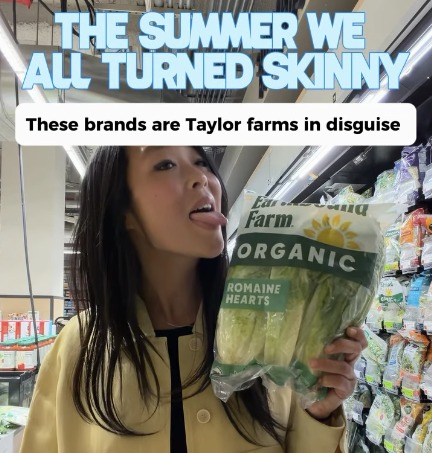
25:32 Wen-Jay If their tentacles are everywhere, think about it. If it's one in four or one out of five like salads in America every single week, that's millions every single week that they're serving. In addition to like their brand name stuff, which is easier to trace but still kinda hard, you have all the white label products, right? So like when Whole Foods sells their own brand of salad mix, when Walmart or Kroger sells their own their own mix, it's their
25:41 Eva That's scary numbers. Yeah.
25:49 Eva Yep. Right.
25:56 Eva Mm-hmm.
26:02 Pamala The white labeling. Mm-hmm.
26:02 Wen-Jay Now you know that they are buying it from Taylor Farms and it's putting their name on it. But when you have those kinds of deals, like a white label deal, they don't have to disclose who they're buying it from and not and Taylor Farms does not have to disclose who they're selling to, which is a problem. So then how is a consumer I mean I spent when I when I was making this information for Instagram
26:05 Eva Yeah. Oi.
26:05 Pamala Right.
26:17 Eva Mm, mm.
26:26 Wen-Jay You know, I'd spend like hours a day researching it because I I don't I'm not gonna just copy and paste what someone else is saying off of Instagram, right? There's we know there's so much misinformation out there. So like I'm trying to figure out, I'm trying to trace the actual source. Can the FDA tell me? Can Teller Farms tell me? Let me find a reliable news source that has done research also. It's very hard to find reliable information on it because they obviously don't want you to know.
26:28 Eva Yeah.
26:34 Eva Mm-hmm.
26:50 Pamala Yeah.
26:50 Eva Yeah, I mean twenty twenty six. It's a s frightening time to to tr to even be attempting to verify truth sources.
27:01 Pamala Also, on that note though, you did say earlier, like we, you know, throughout time in history, we have we've had food recalls, but maybe we're just much more aware of them because of social media and how we're all connected now. Do you think that we've not had like, do you feel like the food recalls or the food the extremeness of the food recalls and the ignoring around it has increased in this time because we're just in like corporate America land?
27:09 Eva Mm.
27:31 Pamala Or do you feel like it is truly just we just know more about it?
27:36 Wen-Jay can't give you like a fact based answer but I can give you like an intuition answer. So one I did quickly see on Instagram some news source saying like if you think there's more recalls, it's cause there actually are. I didn't read it but I didn't see the post. But I think it's a mix of I do think there's more happening. I think how quickly they spread across the country is faster because when you're relying on
27:36 Wen-Jay one or two corporations that supply and the majority of a su food supply chain. This happens in beef, eggs. It happens every part because we're so scaled like that, because ever everything should be like vertically integrated in whatever corporate words you want to use for this, but because that's happening more in business across the board in every kind of industry, a recall can spread so much quicker and also in ways that we can't trace as well.
28:13 Pamala Mm-hmm. Yeah, the scaling of it. Yeah.
28:23 Eva Right.
28:30 Pamala Yeah.
28:35 Eva Yeah.
28:36 Wen-Jay So I think that's why there's more happening and why it's more widespread. And yeah, social media is definitely helping. But, you know, even in August, I was making a post about this, I haven't posted it yet, but I think in August, you know, we have Taylor Farms, we have lettuce, the jalapen and peppers, that's connected to Salmonella, we have eggs, granola, ground beef. And there's something else I forgot, but that's like
29:00 Pamala Today it today it's blueberries again.
29:02 Eva Yep.
29:02 Wen-Jay Right, yeah. So there's frozen blueberries on that list. I mean, that's all just in August, which is that's insane.
29:05 Eva Mm-hmm.
29:09 Pamala That's insane. That's insane.
29:09 Eva There's nowhere that's s reliably safe.
29:15 Pamala Yeah, I was literally making jokes earlier where I was like, I and I think I sent you this post too, NJ, where it's like woman's like, I'm gonna make a meal today, and she's literally chopping up air. She's like, Here's what I can eat today, and she's chopping up air and like cooking air. It's like it's insane. Cause it is true. And I think exactly what you're saying is like, not everybody can even eat fresh or eat healthy. So now we're like, okay, I guess we're just gonna go into the arms of processed food because Yeah.
29:17 Eva Yeah.
29:25 Wen-Jay Yeah.
29:25 Eva Yeah.
29:29 Wen-Jay Yeah.
29:35 Eva Yeah.
29:41 Eva The the food deserts are becoming safer. It's wild.
29:45 Pamala Yeah, it is wild.
29:48 Wen-Jay Yeah, I mean I I always have to give the answer of if there's ever gonna be a time where you just invest a couple of extra bucks in local food, it does not even have to be organic, just make it local, just do it now. It doesn't have to even be everything, you know, like if we know that lettuce is an issue just if you live in New York it's it's a lot easier. We have like a hundred plus farmers markets that happen every week in New York. Just buy lettuce.
30:01 Eva Yeah.
30:18 Wen-Jay You know, from a local farm. It's it's
30:21 Eva I love to buy some some produce from from Tompkins Square Park and then walk through a punk show and you know, it's good it's a it's a fun way to keep it local in New York. But I think that's a great tip, Wenjay, for for everyone really, right? Start with one little thing.
30:25 Pamala Yeah.
30:25 Wen-Jay Yeah.
30:39 Pamala But also what about like washing? I feel like like you were saying sort of this age of convenience where like here's your box of already pre-mixed lettuce or cut up lettuce or here's your fruit bowl of all the different fruit. I'm almost kind of I do feel like there is a culture of washing your fruits and vegetables that we just don't have here. So like the other week I was like,
30:48 Eva Mm, mm-hmm.
30:57 Eva Yeah.
30:59 Pamala What do we use vinegar for? What do we use baking soda for when we're trying to like wash our? I feel like that's almost like a lost art too. Or do you think like that w is kind of insignificant to what's happening?
31:14 Wen-Jay I'm not gonna say it like this is not we're not a court. You can't not it's being recorded but like, you know, I'm not a food scientist. I haven't
31:20 Pamala Yeah. Yeah.
31:20 Eva No.
31:26 Pamala I am I am not a doctor. I cannot give you possible probable advice. Yeah.
31:26 Eva Yeah. Yeah. This is not food this is not d diarrhea advice.
31:32 Wen-Jay Yeah, exactly.
31:32 Wen-Jay I but I have done research on this 'cause people ask me this question all the time. One, I personally hate washing my produce. Like I hate especially lettuce, I hate washing lettuce 'cause you gotta dry it, it's a whole thing.
31:40 Pamala Okay.
31:49 Pamala Salad spinner. Exactly the salad spinners. And they take up so much space.
31:49 Eva The salad spinners do not work. Let's be real. Let's be real.
31:51 Wen-Jay Yeah, like and also who has who has room in a New York City apartment for a salad spinner? I'm sorry. If you do you're you have a private chef, you know what mean? But I can also have that luxury of saying I I very quickly rinse my food because I do work with all these amazing farmers that I've known for a long time. Not you know, they wash everyone their farmers will wash food on the farm as well.
31:58 Pamala A hundred percent.
32:02 Pamala Yeah.
32:03 Eva Yeah.
32:15 Eva Mm.
32:20 Wen-Jay and of course there's some food handling, like people are touching the food after they wash it, but I trust it. And I I'm okay with that, you know. but washing food like it depends on the product to a certain degree. If you're buying a conventional blueberry that's been sprayed with pesticides, you can't fully wash it because it's porous. So like those pesticides
32:25 Pamala Yeah.
32:29 Eva Mm-hmm.
32:49 Wen-Jay go deep into a blueberry. It could be different for something like kale where it doesn't have the same fragile skin and pores like a berry does. so in the end, like there are products that are worse for you to buy conventionally 'cause they just spray it more.
33:08 Pamala Mm.
33:09 Wen-Jay you're not gonna be able wash all of it off. It'll help, but like it's it's a chemical. Like how often can you just spray like wash off a chemical off of anything?
33:18 Pamala Yeah. Okay. What are the most what are the most chemically affected ones?
33:18 Eva Mm. That makes sense.
33:25 Wen-Jay Leaf leafy greens are really bad. So kale, collard greens, spinach I think it's pretty bad. peppers, like bell peppers are pretty bad. strawberries. The ones that are better would be things like that have I always say it's like if it has a condom on it, it's safer. So like avocados have a condom. It's like protected, you know. A natural banana.
33:29 Pamala I heard spinach.
33:36 Eva Mm.
33:45 Pamala Okay.
33:46 Eva Smart.
33:46 Eva A natural protective layer, yeah. A banana.
33:49 Pamala Yeah.
33:53 Wen-Jay Avocados, bananas are great. you know, I have a po I have a post on my Instagram that lists like the five safest foods and the five least safe foods.
34:04 Eva good, we'll put that up on screen for everyone.
34:05 Pamala Okay. Yeah, well definitely.
34:05 Wen-Jay I'll have to send you the link because it is probably deep in there my feed.
34:08 Eva Yeah. We'll pull up.
34:09 Pamala We'll pull it out. I guess my qu my next question is sort of, you know
34:11 Wen-Jay Yeah.
34:16 Pamala Like you said at the beginning, it's very confusing for yeah, go.
34:17 Wen-Jay wait, sorry. I am making a local food guide. It's a PDF. So we can we can promote that. It'll help people like buy local, yeah.
34:22 Pamala Yes.
34:22 Eva You are?
34:22 Eva Excellent.
34:27 Pamala Yes. Well, and this sort of goes this this this is really awesome. It goes into my la my last question, which is basically like like you said at the beginning, it's hard for consumers. Is it marketing? Is it the blah blah, where's the information? so if somebody wanted to go down the rabbit hole with you of like food sustainability or buying or just getting better foods for their themselves or their family, like I know you said visit farmers markets.
34:29 Eva wonderful.
34:53 Pamala Like what are the some of the other things that they can fall down the rabbit hole with you on?
34:59 Wen-Jay topics or how?
35:01 Pamala Just like like how, yeah. How how to do it.
35:03 Eva How to do it.
35:05 Wen-Jay I think I really following my Instagram account is the best way because I will randomly talk about everything that goes from farm to table plus owning a food business. if you want to see what it's like more a farm life perspective on my business account, local roots nyc, I've been posting one minute like I've been posting mini clips every day from a TV show I hosted and it's all about interviewing farmers.
35:32 Eva Mm.
35:32 Wen-Jay So that's like very easy way to just see, you know, how food grows on farms in New York and how beautiful it is. but yeah, on my personal account when J I'll I talk about Taylor Farms plus plus more.
35:49 Eva I'm excited to try a New York tomato now too.
35:49 Pamala Yeah, I have to say. Yeah. I am I'm somebody who just I do try to do my best and diligence and all the things. And I've just recently started to follow your account just leading up to this episode. And I have to say I I have gone down the rabbit hole of a lot of different posts, you know, current and previous that I just found were really informational. And I also just you know, just real in the sense of just like here's like not everything's perfect or
36:15 Eva Hm.
36:18 Pamala Hey, this is the reality of things. And also just like you're such a it seems like you're such a trusted hand because you do have a food service business. So I can imagine, you know, trying to take care of your customers. And it's not like sneakers. It's not like something you put on your feet. It's like something that literally goes into your body. So I just have a lot of like love and respect for that. So thank you for taking that time to, you know, put out all that information for folks.
36:26 Wen-Jay Exactly.
36:36 Eva Mm.
36:44 Wen-Jay Thanks. Yeah, it was it's funny, I was talking to a girlfriend who's in marketing and I was like, you know, I want to make this post about encouraging restaurants to buy local, but what do you think is important to them? Do you feel like it's it's an angle of keeping their customers safe? Or is it an angle of like you can make more money if you do? And she was like, I don't think any of them care about the food safety part because, you know, as a business, you're always thinking about survival.
36:55 Eva Mm-hmm.
37:14 Wen-Jay Profit-wise. But I actually think with I don't know, my my gut is always I mean sometimes I'm definitely wrong, but now is a time for sure for like even if restaurants or food service did not care before or have the capacity to care about this topic, they need to do it now because I I I don't feel safe going to restaurants. Like I'll avoid
37:16 Eva Right.
37:40 Eva Mm mm.
37:41 Wen-Jay those ingredients, you know, when I go out, or I'll go to restaurants I know that's locally. But I can't even imagine imagine like it takes so much money and effort in your entire life essentially to have a restaurant that's successful in New York City. And I know because I had one and I failed at it for other reasons, but I did put a lot into it. Imagine doing all of that and just because
37:44 Pamala Mm-hmm.
37:58 Eva Yeah.
38:02 Eva Mm-hmm.
38:07 Wen-Jay Some shitty company that supplies one out of five Americans with food, sixty percent of all food service with food, that company fucked up. And now you are seeing the repercussions. They won't feel it as much, right? They ha they're a massive But can you as a small business know. That's that's immediate shutdown, you know?
38:21 Pamala Right. They're scaled. Yeah.
38:22 Eva They can absorb that.
38:28 Eva Mm-hmm.
38:29 Pamala Well, I have this actually, this is so interesting you bring this up because I there is a national salad chain. there's a few of them, but I have been wondering how they've been traversing this current recall. And so I was like, you know what, I'm just I happen to be next door to one of them, so I'm just gonna walk by or walk through. And not a single sign was up saying, Hey, we're not using that lettuce, or you know, this is what we've been doing, we're doing this instead.
38:43 Eva Mm-hmm.
38:56 Eva We're doing this instead.
38:58 Pamala And I was like, that's insane. And I was like, I guess as a consumer or as a customer, I'm like, I assume restaurants are going to have safe food. Like, I am going to your restaurant. I'm not even putting safe food on my top three because I assume that that's built in. Like, but to your point, it's not because I did was I was thinking about the salad chain place and I was like, how could you not have anything up acknowledging this?
39:08 Eva Mm.
39:27 Eva Yeah. It's crazy.
39:28 Pamala Or maybe you're just using it and you're just triple washing it and saying, you know, we're hoping everything's fine, which is why you wouldn't mention it. But I just thought it was very I thought it was just crazy that I'm like, your entire business is lettuce and I and you're not acknowledging it. And then I was like, I guess we're all just on different internets. Maybe people just don't have as much information about the lettuce issues that I do that I know about. So
39:41 Eva And you're not acknowledging it, yeah.
39:42 Wen-Jay It's fine.
39:46 Eva Yes.
39:46 Eva You're not you're you're not deep enough into the lettuce internet, Pamala.
39:51 Wen-Jay I wouldn't.
39:53 Pamala Yeah, exactly.
39:54 Wen-Jay Well, I was talking to my really good friend who's a private chef in New York and I was talking about like Taylor Farms and he was like, is that like the whole like lettuce thing? And I thought it was so funny because like he's in food in New York and he didn't but like because he goes to farmers markets, like he's not even and he Yeah, like he's just doing super high end like, you know, private chefing events and he's everything
40:07 Eva Yeah. Is that because he's too local?
40:07 Eva Okay. It's just not on his radar.
40:21 Pamala He's not going to he's not going to Trader Joe's.
40:23 Wen-Jay No, everything he's getting from like the Union Square Farmers Market, but it is I think it's also crazy that you wouldn't just put a sign up of like, we don't buy their you know, we don't buy television. Yeah.
40:35 Pamala Right? That's what I thought too. Then I was like, well, maybe they do, and that's why they don't put up a sign. But I was like, even in your local chain, so like unless they're servicing your entire business. But that's what I was like, I was like, but again, how we know who's servicing like even like a Chipotle? Like, how do we know who's servicing it? But again, you can I think you can walk into a lot I'm not saying I haven't checked out Chipotle, so I don't know. But I don't I think you could probably walk into a lot of these like fast casuals.
40:40 Eva And they don't want to address it.
41:03 Pamala And there's no sign up, and it's a pretty specific ingredient to what they do, which I thought was just so peculiar.
41:08 Eva Mm-hmm.
41:11 Wen-Jay And she probably does buy their food from Taylor Farms. but it it's funny, yeah. I I don't know so you're saying that as a consumer up until now, you're just a s you have this assumption that the rest the restaurants are sp you know, serving f safe food. I think from someone that comes from hospitality, and this is not to put restaurants down at all.
41:11 Eva Yeah, it's weird.
41:15 Pamala okay.
41:28 Pamala Yes.
41:33 Wen-Jay My assumption is it's not safe until I can like scope out what's happening. And it's not that I think, this place is dirty. It's like I don't know what they're doing back there. I know how many how much has to go into one night of service, that's something that's gonna be overlooked. And again, I'm not saying that restaurants are dirty or bad. But you also know, like I just remember one time my friend who
41:39 Eva That's interesting.
41:46 Eva Mm-hmm.
42:02 Wen-Jay Is a very, very well experienced chef. I very much a look up to him. we were at a conference and he was like, Don't don't get the special and don't get the seafood. It was like a Monday or something. Monday or Tuesday. I like, Why? I didn't think about that. He's like, No restaurant is getting fresh quality seafood coming in on a Monday or Tuesday. And the specials
42:08 Eva Mm-hmm.
42:25 Eva On a Monday.
42:28 Wen-Jay are probably at this kind of restaurant, it's definitely things we're trying to push. It's not like a farm table small scale restaurant. Yeah, and I was like, my God, I didn't think about that. So now I just never get those kinds of products on certain days because you would never think about that as a c as a diner. But when you're in a food service you'd know how the systems work and you're like, God, Monday or Tuesday
42:33 Eva Right.
42:34 Pamala It's about to go bad. Yeah.
42:42 Eva Yeah.
42:51 Pamala Yeah. Yeah. I mean, that was definitely a thing when experiencing New York, they're like, You don't go get sushi on a Monday. Like you or like, what are you talking about? That would be gross. But again, I think we've just industrialized everything. So where it's like you can just get tomatoes year long, you can just get every kind of fruit and vegetable year long, which I think is also kind of bizarre and weird too.
42:57 Eva Mm-hmm.
42:58 Wen-Jay Yeah. Yeah.
43:01 Eva So funny.
43:12 Wen-Jay It is very bizarre. But also with the whole like Taylor Farms thing, one more thing is that a lot of so that stuff the lettuce that was linked to the the parasite, it was grown it was it came it came from their Mexico facility. and this is I'm not saying this is what happened there, but like there are issues also when food is grown in another country. It could be any country, not just Mexico, but coming into America and
43:27 Eva Mm.
43:40 Eva Sure.
43:42 Wen-Jay the label like there's not the same concept of double checking that the standards are the same. So let's say you grow organic corn and you don't actually grow it organically, but at the border, they're not checking anything. So you can just write it down. That's also an issue where like at we have to be I mean this country needs to get better at a lot of things, but for sure checking things at the border, I mean, that seems like an obvious thing to me, but
43:48 Eva Right.
43:57 Eva Right. Yeah.
43:59 Pamala Right.
44:10 Pamala Yeah. okay. Well, thank you. Yeah. Yeah. No, no, I think, you know, education is power, you know. Absolutely.
44:14 Eva so much to think about, Wenjay.
44:17 Wen-Jay Sorry, I'm always a downer when people talk to me.
44:20 Eva No. Mm-hmm.
44:24 Wen-Jay But I say it like peppy and like a sumo, so like it's confusing to people. I like peppy stuff so much.
44:28 Eva I
44:28 Eva Well, it's it's better for all of us to be able to confront the horrors with a smile, right? And and so we're we're all in here together doing our best.
44:32 Pamala Okay.
44:38 Wen-Jay Right, yeah.
44:40 Pamala And we're all just doing our best. We're all trying to do our best. And it's helpful and it's how it's good when we're helping each other. And that's what you're doing. So we appreciate you. all right, friends. well, that's all for today's episode of You Know Too Much. Thank you so much to NJ. Now we know way too much about local farming.
44:47 Eva Yes.
45:00 Eva Yes. And if you enjoyed this episode, please subscribe, leave us a five-star review, and share it with someone who'd love it or needs to learn more about where their produce is coming from. You can explore more episodes and behind the scenes content at you know too much.media.
45:17 Pamala Follow us wherever you get your podcast to keep the obsession going. Thank you. Thank you so much, Wenj. Thank you.
45:23 Wen-Jay Thank you, Alex. Bye.
45:23 Eva Thanks, Monjay. Bye. That was great.
45:26 Pamala Bye. Yeah. Okay.