Section 01
Extras
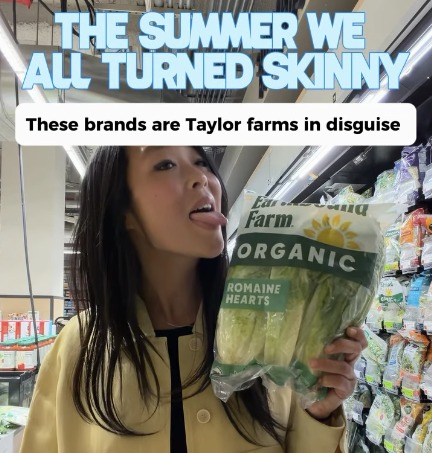
Wen-Jay’s own farm subscription, plus the real recall behind the episode.
Section 02
Credits
- Guest
- Wen-Jay Ying
- Co-host
+ Creative Director - Pamala Buzick Kim
- Co-host
+ Executive Producer - Eva McCloskey
- Producer / Social
+ Post-production - Ky Meyer · Kollective Media
- Post-production Producer
+ Editor - Narciso Palma · Kollective Media
- Creative Partner
- Jessie Nagel · Hype World
- Music Composer
- Elijah B. Torn
- Production
- A mavenverse production
Section 03
Transcript
Final transcript, auto-transcribed and lightly cleaned. Names and terms may be misspelled.
Read full transcript (~19 min)
0:00 Wen-Jay Oh, my God, this is hitting the whole nation. It's. It's killed two people. It's like hospitalizing thousands of people. This is a problem.
0:08 Eva Welcome to. You know too much. A bite sized trip down the rabbit hole with people who know way too much about one very specific thing. I'm Eva McCloskey.
0:17 Pamala And I'm Pamala Buzick Kim. Let's get to know too much. Oh, my God, I've never seen a post. And you're just like, I feel that. I feel that in my soul today.
0:28 Eva The frickin Oreo mom thread. Yes.
0:31 Pamala It's my life. Well, yeah. Life. Yes, that one too. It's. It's not my life. But I found it hysterical. But the post I saw today was literally a woman who's like, oh, what should I make today? And she's literally like, chopping up air and then starting air because this is because let's eat anything today. That's all that's safe.
0:50 Pamala Everything is in food recall. It's scary. And terrifying. So do you want to, like, talk about that some more? Yeah. Let's do it. Yeah, let's do it.
0:59 Eva Wen-Jay will you tell us what you know too much about?
1:06 Wen-Jay Well, I know too much about who parasites. I know too much about Taylor Farms. I know too much about pretty much anything about local food, in New York City. And how fucked up the food system is in America. I know too much about.
1:22 Pamala Yeah. So just small things.
1:23 Eva We're all learning too much about all of this. Right. So you already you already knew. How did you come to know so much about why we all now need to care about the, the poop parasites, the poop.
1:37 Wen-Jay Yeah. So the business is called Local Roots NYC. It's a essentially a modernized CSA. But imagine that they've a subscription based farmer's market. You're subscribing to food from local farmers, and then you're going to pick it up at a neighborhood market that we set up, or we deliver it to you.
1:56 Pamala Yeah. So you now know so much about, you know, running this business, but also the farmers and the food behind the business of what you're doing, too. So how often are you having conversations with the farmers and like, how are you? How what have you seen changed throughout the years?
2:15 Wen-Jay And yeah, I got to lead leads me to like the whole Taylor Farms or any kind of like food issue or recall. It's happening in the mainstream food system is when that happens, you know, it's it's it's like horrendous with how shitty the food is in America. And it's painful to me because most people that eat that food, it's most most people don't have a choice.
2:40 Wen-Jay It's not because it's all there. It's because there's so much to that. Like weighs you down in knowing what to buy. So like my accuses people, the convenience factor confuses people.
2:55 Eva The access.
2:56 Wen-Jay Is there.
2:57 Eva To right.
2:58 Wen-Jay Where it's like in price. Consumers feel that they have to be part of buying this food that were just given. Which is why it's called mainstream you know. And like that is painful to me because people want something better. But they might not even know a better options out there because they were never taught, that there are so many issues with food.
3:20 Wen-Jay But now they're seeing, you know, the issues with Taylor Farms. They've had many recalls in the past. Right? They just like the media doesn't talk about it. Sure was. Food recalls all the time in America. Maybe not as much. And maybe they weren't happy at the time. Instagram. But now people are able to see like oh my god this is hitting the whole nation.
3:44 Wen-Jay It's, it's killed two people. It's like hospitalizing thousands of people. This is a problem right. And I don't know what will come out of this or if like people if we're kind of just going to go back to pretending, I think it's easy to pretend this isn't a huge issue because it's so hard to fix.
4:03 Pamala So yes. Why is our food system so different? I mean, is it I'm sure there's a million different reasons and corporate greed, but like, why do we allow our food system to be so bad and so different from everywhere else?
4:19 Wen-Jay Everyone always says, have you ever had a tomato from Italy? Oh my. Like New York rose amazing tomatoes, but no one ever thinks about oh my God, I have to get a New York tomato. So it's not the farming, it's the culture around it. But but yeah, it's a culture we don't we don't really value agriculture in America because we don't have a culture of valuing it here.
4:45 Wen-Jay It's just a product to make money off of.
4:48 Pamala Yeah. So is that so? We've gotten to Taylor Farms. Like what exactly? Now? I think some people I've spoken to were like, oh, well, I don't eat at Taco Bell. And then some people, I don't think they know the extensive the extent of where the Taylor Farms products go.
5:09 Wen-Jay Yeah. So Taylor Farms, you know, I was like, I have I've don't way too many Instagram posts about diarrhea. It's because of this thing. But Taylor Farms, they have they own farms and production facilities all across the country. And Mexico. So that also means like they themselves. It's not like a family farm where they know everything that's happening in their fields.
5:34 Wen-Jay Right? It's like right. All its farms that they have partnered with like growth. And then they're.
5:39 Eva Subcontractors.
5:40 Wen-Jay Right. And that's getting harvested. And it goes to all these different Taylor Farms production facilities to be like wash, cut, package. So it's all processed. You know, we all know that when you scale like that it's very hard to do quality control quality.
5:54 Eva Yeah.
5:55 Wen-Jay Consistently too. And so people, you know, we're thinking the Taylor Farms is like, oh, let's avoid Taco Bell. We saw that on the news, right? With the, the lettuce packages that we see in Whole Foods that they sell.
6:10 Eva But in the clamshells.
6:12 Wen-Jay Yeah. Not realizing that Taylor Farms I, I think it was they grow salad for one out of 4 or 1 out of five Americans every single week. We also service 60% of food service for their precut like lettuce. And you know, they do their hollow pan and peppers. They have lot. They also do carrots, cabbage, herbs.
6:37 Wen-Jay Because what they're doing is it's not just, oh, here's salad. This is the way we grow. It's when you're.
6:42 Eva Garnish.
6:43 Wen-Jay Yeah. When you're in a huge scale food service like a hospital, a university, a ballpark, a Taco Bell, that kind of thing. They're not spending their time cutting their old lettuce right back on your prepackaged and, food prep. So that's also why, like, it's it's not just lettuce. Like, who knows what's happening to all these other products that are being purchased pre diced and then also put into condiments like how a piano peppers.
7:11 Wen-Jay It's not like oh wait, let me avoid a jalapeno pepper a Taco Bell. It's like no they're buying these precut jalapeno peppers and then putting into condiments which still use as is, you know or yeah, it also.
7:25 Eva That chain is long and it's everywhere.
7:29 Wen-Jay They're tentacles are everywhere. Think about yeah it's a warning for a one out of five like salads in America every single week.
7:37 Eva That's the scary.
7:39 Wen-Jay News every single week that they're serving. Yeah, sure. Like their brand name stuff, which is easier to trace, but still kind of. Yeah, you're right out of the white label products. Right. So like but food sells her own brand of salad mix. When Kroger salads are out, they're all mixed.
7:57 Pamala It's they're the white labeling.
8:00 Wen-Jay We know that they are buying it from Taylor Farms and it's putting their name. But when you make those kinds of deals like a white label deal, they don't have to disclose who they're buying it from. And not until it does not have to disclose who they're selling to, which is a problem. And how as a consumer I mean I spent when I, when I was big this information for Instagram I you know it's spending hours a day researching it because I know I'm not going to just copy and paste someone else's saying off Instagram.
8:28 Wen-Jay Right. There's so much misinformation out there like I'm trying to figure out. I'm trying to trace the actual source. Can the FDA tell me, you can tell our farms, tell me. Let me find a reliable news source that has done research. Also, it's very hard to find reliable information on it because they obviously don't want you to know.
8:47 Eva Yeah, I mean, 2026. Yeah. It's a frightening time to to try to even.
8:53 Wen-Jay Be.
8:54 Eva Attempting to verify truth sources.
8:58 Wen-Jay I think it's a mix. I do think there's more happening. I think how quickly they spread across the country is faster, because when you're relying on 1 or 2 corporations that, supply and the majority of the food supply chain, this happens and the.
9:22 Pamala Scaling of it happens. Yeah.
9:24 Wen-Jay Because we're so skilled like that because, yeah, every everything should be like vertically integrated in whatever output, whereas you want to use for this, but because it's happening more in business across the board, every kind of industry. Yeah, a recall can spread so much quicker and also in ways that we can't trace as well. Yeah. So I think that's why there's more happening and why it's more widespread.
9:46 Wen-Jay And yeah, social media is definitely helping. We have Taylor Farms, we have lettuce, the jalapeno peppers that's connected to salmonella. We have eggs, granola, ground beef. And there is something else I forgot.
10:01 Pamala But that's a day to today. It's blueberries. Yeah, right.
10:04 Wen-Jay There's frozen blueberries on that list. I made a call just in August. Yeah. I mean, if there's ever going to be a time where you just invest a couple extra bucks and local food, it does not even have to be organic. Just make it local. Just do it now. It doesn't have to be everything, you know, like, if we know the lettuce is an issue, just if you live in New York, it's it's a lot easier.
10:28 Wen-Jay We have like 100 plus farmers markets that happen every week in New York. Just buy lettuce, you know, from a local farm.
10:37 Eva It's I love to buy some some produce from from Tompkins Square Park. And then, yeah, walk through a punk show and, you know, it's it's a it's a fun way to keep it local. Yeah. In New York. But I think that's a great tip one day for for everyone really. Right. Start with one little thing.
10:55 Wen-Jay Washing food like it depends on the product to a certain degree. If you're buying a conventional blueberry that's been sprayed with pesticides, you can't fully wash it because it's porous. So like those pesticides go deep into a blueberry. So be different for something like kale, where it doesn't have the same fragile skin and pores like a berry does.
11:24 Wen-Jay Yeah. So in the end, like, there are products that are worse for you to buy conventionally because they spray it more.
11:35 Wen-Jay You're not going to be able to wash all of it off. It'll help. But like, it's it's a chemical. Like, how often can you just spray, like, wash off chemical off of anything.
11:43 Pamala Yeah. Okay. What are that? Makes sense. What are the most chemically, affected ones?
11:51 Wen-Jay Leafy greens are really bad to kill. Collard greens.
11:55 Pamala Spinach.
11:56 Wen-Jay Spinach, I think is pretty bad. Peppers, like bell peppers are pretty bad. Strawberries. The ones that are better would be things like that. Have I always say if it has a condom on it, it's safer. So like.
12:10 Pamala Okay.
12:11 Wen-Jay So what? I have a condom. It's like protected.
12:14 Eva A natural.
12:15 Wen-Jay A not protective.
12:16 Eva Layer. Yeah, a banana, banana.
12:18 Wen-Jay Avocados, bananas are great. And making a local food guide. Yeah. You are. Yep. Follow my Instagram account is the best way because I like. I've been posting many clips every day from a TV show. I hosted, and it's all about interview covers. So that's like a very easy way to just see, you know, how food grows on farms in New York and how beautiful it is.
12:41 Wen-Jay Thanks. Yeah. It was it's funny, I was talking to a girl, a friend who's in marketing. I was like, you know, I want to make this post about encouraging restaurants to buy local. But what do you think is important to them? Do you feel like it's an angle of keeping their customers safe, or is it an angle of, like, you can make more money if you do?
13:05 Wen-Jay And she was like, I don't think any of them care about the food safety part, because, you know, as a business, you're always thinking about survival as profit wise. But I actually think, I don't know, my my gut is always I mean, sometimes I'm definitely wrong, but now is the time for sure. For like, even if restaurant or food service did not care before or have the capacity to care about this topic, they need to do it now because I, I, I don't feel safe going to restaurants like I avoid those ingredients, you know, when I go out or I'll go, yeah, if I do it like but I can't even imagine imagine like it
13:46 Wen-Jay takes so much money and effort and your entire life essentially to have a restaurant that's accessible in New York City. And I know because I had one and I failed at it for other reasons, but I did put a lot into it. Imagine doing all of that. And just because some shitty company that supplies one out of five Americans with food, 60% of all food service with food, that company fucked up and now you are seeing the repercussions.
14:16 Wen-Jay They won't feel it as much right there. Right? A mask failed. They can absorb that. But can you as a small business. No, that's that's an immediate shut down you know.
14:26 Pamala Well I am this actually this is so interesting. You bring this up, there is a national salad chain. There's a few of them, but I have been wondering how they've been traversing this current recall. And so I was like you know what I miss? I happened to be next door to one of them. So I'm just going to walk by or walk through.
14:45 Pamala And not a single sign was up saying, hey, we're not using that lettuce or, you know, this.
14:51 Eva We're doing this instead.
14:52 Pamala We're doing this instead. But I just thought it was very I thought was just crazy that I'm like, your entire business is lettuce and you're not acknowledging and you're not acknowledging it. And then I was like, I guess we're all just on different internets. Maybe people don't have as much information about the lettuce issues that I didn't know that I know about.
15:08 Eva So you're not deep enough into the lettuce internet? Yeah, exactly.
15:13 Wen-Jay I think it's also crazy that you wouldn't just put a sign up of, like, we don't bother, you know, we don't. Yeah.
15:21 Pamala But again, how would we know who's servicing like even like a Chipotle. Like how do we know who's servicing it.
15:27 Wen-Jay And Chipotle does buy their food from Taylor Farms. Yeah.
15:30 Pamala Okay.
15:31 Wen-Jay Yes. From someone that comes from hospitality. And this is not to put restaurants down at all. My assumption is it's not safe until I can like, scope out what's happening.
15:42 Eva That's interesting.
15:43 Wen-Jay It's not that I think, oh, this place is dirty. It's like, I don't know what they're doing back there. I know how many, how much it has to go into one that of service that something's going to be overlooked. And I guess I'm not saying that restaurants are dirty or bad, but you also know, like, I just remember one time my friend who is a very, very well experienced chef, I very much I look up to him.
16:13 Wen-Jay We were at a conference and he was like don't, don't get this special and don't get seafood. It was like a Monday or something. Monday or Tuesday. I was like, why? I didn't think about that. He's like, no restaurant is getting fresh quality seafood coming in on about a Monday day. And the specials are probably at this kind of restaurant.
16:32 Wen-Jay It's definitely things you're trying to push. It's not like a farm table, right? Right. A scale.
16:37 Pamala It's about to go bad.
16:38 Wen-Jay Yeah, yeah. Not like oh my God, I didn't think about that. So now I just never get those kinds of products on certain days because yeah, you would never think about that as a, as a diner. But when you're in food service, you know how the systems work and you're like, oh God, Monday or Tuesday, but also with the whole, like, Taylor Farms thing.
16:55 Wen-Jay One more thing is that a lot of so that stuff, the lettuce that was linked to, the, the parasite, it was grown. It was it came from their Mexico facility. And this is I'm not saying this is what happened there, but like there are issues also when food is grown in another country, it could be any country, not just Mexico becoming America.
17:21 Wen-Jay And the label, like there's not the same cons of double checking that the standards are the same. So. Right. Let's say you grow organic corn and you don't actually grow it organically, but at the border they're not checking anything. So do you just read it. No issue where like I, we have to be I mean, this country needs to get better at a lot of things, but for sure, checking things at the border, I mean, that seems like an obvious thing to me, but.
17:50 Pamala Yeah, well thank you.
17:53 Eva It's better for all of us to be able to confront the horrors.
17:57 Pamala With a smile. Right. And and so. And we're all.
18:02 Eva Here together.
18:03 Pamala To try to do our best. And it's helpful and it's hope. It's good when we're helping each other and that's. Yes. So we appreciate you. All right, friends, well, that's all for today's episode of, You Know Too Much. Thank you so much to Wen-Jay. Now we know way too much about local farming.
18:20 Eva Yes. And if you enjoyed this episode, please subscribe. Leave us a five star review and share it with someone who love it or needs to learn more about where their produce is coming from. You can explore more episodes and behind the scenes content at You Know Too Much dot media.
18:37 Pamala Follow us wherever you get your podcasts to keep the obsession going. Thank you. Thank you so much Wen-Jay. Thank you, thank you.
18:45 Eva Bye bye.