Section 01
Extras
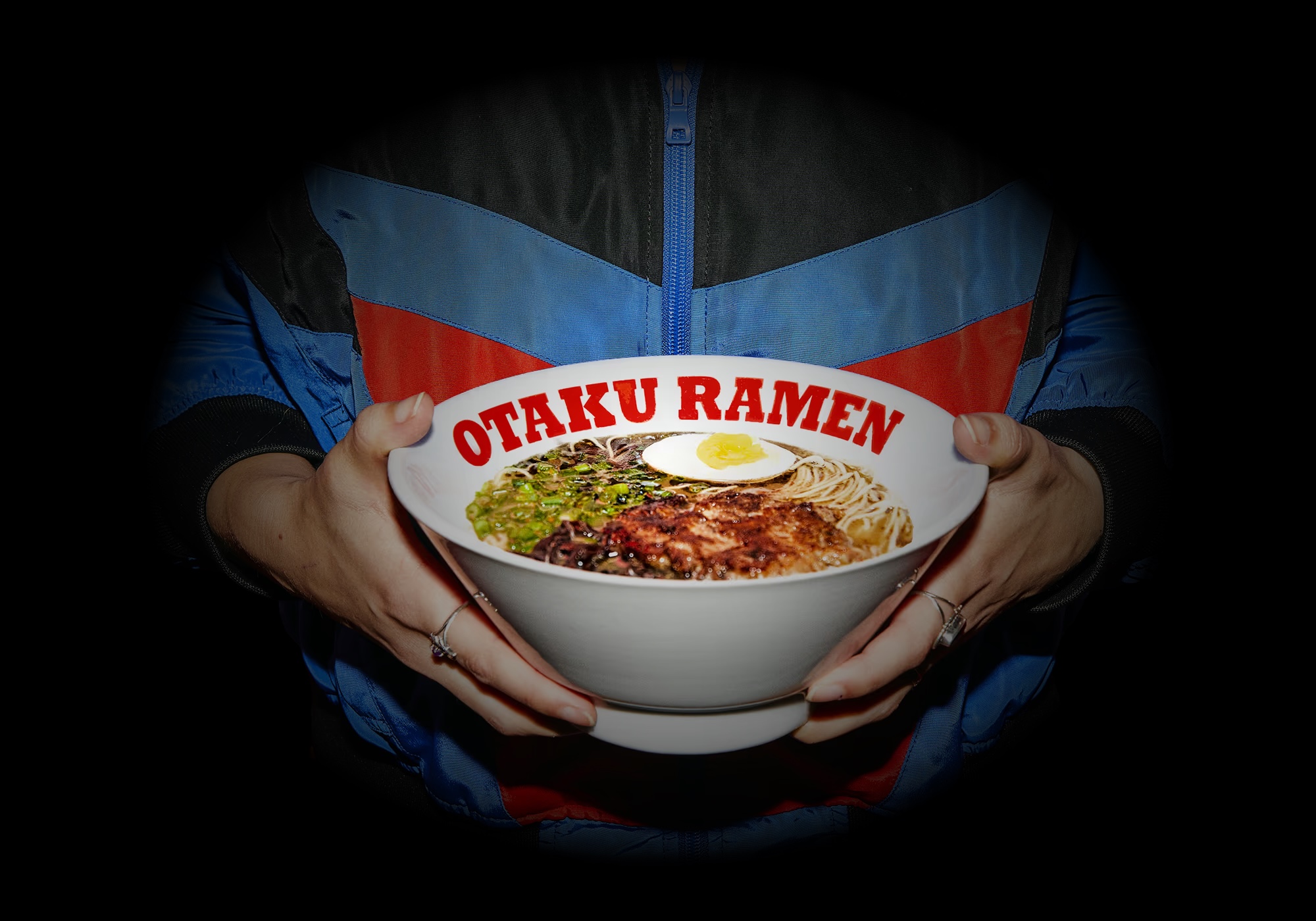
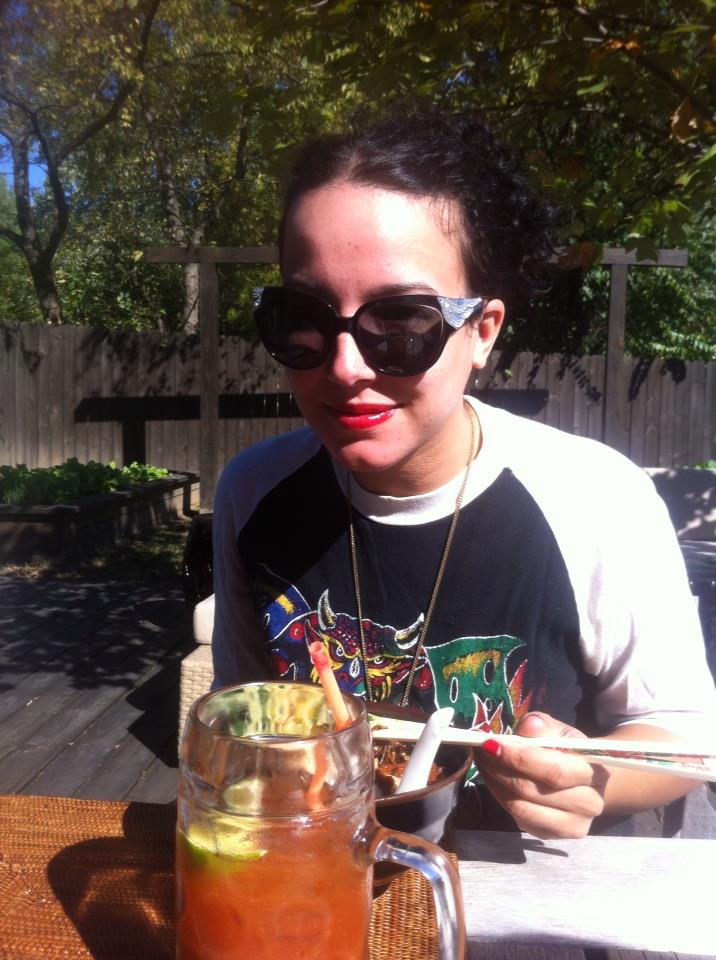
Links and visuals Sarah wanted you to see.
Section 02
Credits
- Guest
- Sarah Gavigan
- Hosts
- Eva McCloskey & Pamala Buzick Kim
- Creative Director
+ Show Producer - Ky Meyer · Kollective Media
- Producer + Editor
- Narciso Palma · Kollective Media
- Creative Partner
- Tom Christmann · TiNY Ad Agency
- Music Producer
- Elijah B Torn
- Production
- A mavenverse production
Section 03
Transcript
Auto-transcribed and lightly cleaned. Names and terms may be misspelled.
Read full transcript (~19 min)
0:00 Sarah A bowl of ramen consoled me, and then I started chasing it. And I lived in Los Angeles, which turns out, is the very first place that ramen came when it came from Japan to North America. So I was in the right place at the right time.
0:16 Eva The internet wants you to know a little about everything.
0:18 Pamala The headline here, a trending topic there.
0:21 Eva Just enough to have an opinion, but.
0:23 Pamala Never enough to understand.
0:24 Eva This is, you know, too much a.
0:26 Pamala Show about the opposite.
0:28 Eva The people who go all the way down the rabbit hole.
0:31 Pamala The collector.
0:32 Eva The overthinker, the obsessive. This is, you know, too much.
0:38 Sarah Hi, I'm Sarah Gaffigan, and I know too much about ramen. Well.
0:42 Pamala Why, when and why?
0:44 Sarah Why now? I'll start it by saying that I think the way that I think other people see this story is like if there was an anchor sitting behind a desk and he he's like, white, middle aged housewife makes ramen news at 11.
0:59 Eva Tell us more.
1:01 Sarah I had had one of those days that we have all had in the world of advertising, and I just flipped my desk and was like, I'm out of here. I'm going to go to that ramen shop down the street that I've been wanting to go to. And I walked in and it was a Japanese grocery store with a food court.
1:22 Sarah And it's not like I had never been in an Asian food court before, but I was in such a state when I walked in there and I was like, I don't know what to do. I just walk up, okay, I order, am I supposed to eat this? Take my glasses off for my hair back there eating the noodles first when I finally, like, got into the bowl and then I, like, came up for air.
1:42 Sarah I was like, oh, I feel better.
1:46 Eva You were in LA?
1:48 Sarah Yes. You know, I was a music supervisor. So, you know, you get that call at midnight to replace a track. You stay up all night, you work on it, it doesn't work out. They dismiss you in two seconds. And I didn't. I thought I was inconsolable at that moment, but yet a bowl of ramen consoled me, and then I started chasing it.
2:09 Sarah And I lived in Los Angeles, which turns out, is the very first place that ramen came when it came from Japan to North America. So I was in the right place at the right time. And the ramen boom was just beginning in America. So I got all those really early Japanese ramen shops. But once I learned the science, that was like, oh.
2:32 Eva Why was it? Yeah. Tell us, why was it so important?
2:35 Sarah I mean, the science is umami, MSG, which is the version that Americans know monosodium glutamate, which I think is really deeply defied. I call it the nuclear superpower of a mommy. If used responsibly, it's a great source of energy.
2:51 Eva Like all nuclear power. Yeah, exactly.
2:53 Sarah Ironic, but not right. Mommy is formed through two or more amino acids present on the palate at one time. Sends receptors to the brain that sets off serotonin. And dopamine. Literally makes you happy.
3:06 Eva Yum.
3:07 Sarah You know how, like, you take a bite of a really great piece of pizza and you, like, do a little happy dance to mommy tomato and parmesan doing the work.
3:15 Pamala Wow. And what is it about? Right. Like, so we got this sort of science. But then what kept driving you about? Like, what made you just go so deep into it?
3:25 Sarah It's such a mystery. Like, when I came into the industry, literally, there was nothing written about it. Like, barely even in Japanese and in Japan, it was up until about six years ago, completely under cloak, like no one was ever writing anything down, sharing it with anybody. You had to go work for that master to learn that style and whatnot.
3:52 Sarah I had bombed out of the advertising industry, and I was looking for what was next for me. I had relocated from Los Angeles to Nashville, which is where I grew up, and it was an extremely difficult transition for me. I was like, why am I back here? This means I failed. If I'm back here, I fail and I'm raising this feral child.
4:15 Sarah Neither of us belong in the Deep South enough, you know? So I think one of the kind of like, light bulb moments was that, like the mothership of ramen that everyone knows is tonkatsu, pork bone broth. And that's kind of the creamy white, milky looking ramen. And I was like, wait a minute. I live in, like, surrounded by pig farms.
4:38 Sarah Yeah, I can make that. And that's kind of how it started. As I walked into my local butcher and I asked for bones, and they asked me what I was going to make, and I told them, and they look at me like I had three heads.
4:51 Eva Just cracked, you know? Yeah, well, you.
4:53 Pamala Have this, like, goal of like, okay, you're kidding you. You're now obsessed with ramen. Did you know what you wanted to do with it? Like, right away or you just you just kept doing one step at a time.
5:06 Sarah I mean, I think it's a little bit like how I've done every business I've started. I am a very hyper focused, ADHD, highly passionate type of personality. Once I dig my teeth into something, I'm just blinders on. There's not a lot of like, rationale going on. Guess it is like, I want this. How do I make it happen?
5:31 Sarah Let's go. I've definitely had moments in my career where I've been humbled, and then I come out of that moment of feeling humbled and I'm like, can somebody just put the fucking blinders back on?
5:42 Pamala Was that what you did with it? So tell us, like what did.
5:45 Sarah So yeah, it started as pop ups okay. And you know, I worked in film production, so I knew how to run a pop up. That was pretty much the exact same thing. And because I understood, I guess, chaos within structure, it really translated in like a film set and a restaurant, be it for one night or brick and mortar, are very similar in the way that they function.
6:11 Sarah Believe it or not, you got a producer, director, all of those things, and you've got to make it happen under duress and stress and there's money involved. And I had never worked in a restaurant until I set foot in my own crazy, you know, the ramen shop plays a role in in people's lives. And I learned that when I lived in Los Angeles.
6:32 Sarah And, I mean, it was so intoxicating to start a project like that set in 2015, in Nashville, when literally nothing had been done. Nothing.
6:42 Eva So I had one of your first bowls of ramen in your backyard before the pop, right?
6:48 Sarah Like, you're you're really, truly it shows what a great friend you are that you ate that bowl. Because I would need that bowl. Somebody put it in front of me today.
6:55 Eva What does that say about my palate? I thought it was delicious.
6:58 Sarah Think it says you're a good friend, diva.
7:01 Pamala Probably too hard on herself to these things.
7:04 Eva To think.
7:05 Pamala What? So, like with ramen? Like, what are some of the misconceptions that people have about running? What are what are the thing? And then secondly, what's the thing you want people to know about ramen?
7:15 Sarah Yeah, I mean, it's usually two, two things that come up over and over again. And I'll ask them to you as questions for fun. How old do you think ramen is?
7:25 Pamala Oh, hundreds of years old. Hundreds. Like its very.
7:30 Sarah First World War two.
7:31 Eva Oh, what?
7:32 Sarah Yeah. So how the Chinese immigrating to Japan in the early 1900s brought with them an alkaline noodle, which we now know as the ramen noodle. And about 1938, the first signs of what we now call ramen were being served. The war happened. Shut down the country. Post-World War Two greatest famine in the history of Japan. No rice. American wheat is being shipped to Japan.
8:04 Sarah It's being used to make these alkaline noodles because it needed no egg and it was shelf stable. The Chinese were just getting the bone scraps, making this, making the soup, putting the noodles in it. They built these little U ties and started going around to the factories to feed people as they were rebuilding Japan, and they called it stamina, food, they said.
8:29 Sarah And many Japanese say that, you know, it's kind of thought of as the food that saved them. And it did not actually become popular with, like, the kids in Japan until the 80s. So it's very new and it's so it's, it's that's I guess there's three things. That's number one. Number two is it's not a recipe, it's a cuisine like it is a whole world unto itself.
9:02 Sarah And that kind of rolls into number three. What makes ramen? Ramen. Is it the broth? Is it the noodle? Is it the toppings? Is it the way it's put together? It's the noodle. In Japan, if the noodle does not have an alkaline in it like a sodium bicarbonate, what we would think is like a baking soda. Yeah. It cannot be called ramen.
9:26 Sarah Really? Yep. So, you know, you see people like a quick ten minute ramen recipe that's not ramen is wrong. That's not ramen, that's noodle soup. And I'm sure it's delicious, but it's not ramen.
9:40 Eva With wavy noodles. Yes.
9:42 Pamala So what do you think about all the.
9:47 Sarah I mean, I think that I think that there are a lot of really clever people coming out with products that are really interesting, that are kind of riding sidecar to the same cultural phenomenon that I did. Which is the the explosion of otaku culture in America. The word otaku, literally translated means at home. And it was originally a derogatory term that was given to people that did nothing but stay home and play video games and like, had no social skills.
10:16 Sarah Woo!
10:17 Eva Otaku. Oh you.
10:19 Sarah Know, and and it became an entire subculture and now it's the largest subculture in the world.
10:24 Eva So.
10:25 Sarah You know, why is somebody making a protein instant ramen. I you know, you could answer that in a myriad of ways, but the reason why it's successful is because of anime on Netflix and Hulu.
10:36 Eva Crazy. Yeah. Demon hunters.
10:38 Sarah Yeah, 100%.
10:40 Eva The reclamation of what is meant initially as something derogatory.
10:45 Sarah So that's that's why I chose the word, because when I read it, I read it as obsessed. Like the ramen otaku, the ramen obsessed. Little did I know what was under that hood.
10:57 Eva Whoa! Yeah! Oh my goodness. And we'll be right back. After this.
11:02 Pamala We spotted consumers are drinking less, but still want the ritual of a great cocktail that's why blind tiger spirits free cocktails preserves that ritual without the spirit. Find us at Blind Tiger Spirit free.
11:13 Eva Com 16g protein, eight grams fiber, one gram net carbs per serving. That's what Jerry's does. We make healthy, tasty bread using minimal ingredients that you can also pronounce. See our better breads at Get Jerry's dot com.
11:28 Pamala And now back to the show.
11:30 Eva If you're listening and you're lucky enough to be in Nashville, please do yourself a favor and get a bowl of ramen. Ben.
11:39 Pamala Yes, well, I was going to also ask you, like if I let's say I was brand new to ramen somehow I've been under a rock and I've never had ramen where, where or what type of ramen should I be? Should I introduce myself to? Is there a specific place? Is there a specific type.
11:56 Sarah You like, what you eat? The most, right? Like my favorite bowl of ramen is the first bowl of ramen I ever had. And I my number one, my tonkatsu shio is based on that very first bowl of ramen that I ever had. It made that deep of an impression on me. You know, if it looks like a salad, don't eat it.
12:15 Sarah It's not a salad. That's like, it's not salad does not need 14 toppings. The toppings are actually not the star of the show. They're the supporting actor.
12:25 Pamala Right?
12:26 Eva The broth and the noodle, the brutal, the the the brutal, the broth and the both.
12:32 Sarah Well, it kind of is because they work together and they're they're engineered to go together. We send our broth up to our noodle factory and they match it to a noodle.
12:43 Pamala Oh, well. Oh, that's so cool.
12:46 Sarah Yeah. So that it doesn't take in too much stock at once, so that it kind of like the broth comes with the noodle a little bit when you slurp, like there's so many little bitty factors that we think about when we engineer a bowl of ramen. Here's another key. If you go to a ramen shop and you can make your own ramen.
13:08 Eva Don't do it.
13:08 Sarah No, because, well, you've got the noodle size and what we eat, it's made out of. Then you've got the seasoning. All of these things work in concert. So like, you can go see 14 bands at once, or you can go see one band. That's really good.
13:27 Pamala Yeah. And when you're when you're sitting down and having a bowl of ramen, what's your kind of like checklist?
13:33 Sarah So when I sit down to a bowl of ramen, the first thing is you really want to take in the aroma. That's what they've worked really hard to like. Get that to stimulate, literally make your mouth water. It's a very sensory experience. Like if you've if you're watching this and you've never had a bowl of ramen before, I beg you, when you go have a bowl of ramen, go by herself, put your phone away, tie your hair back, take your glasses off, and it's like a meditation for real.
14:03 Sarah Then take a little sip of the broth. Just kind of like get a sense of the bowl, and then you just pound the noodles because a ramen noodle has about a three minute life span in that bowl. Really? Yeah. Yeah. So scientifically, it's very low hydration noodle. So pastas like up here at 30% hydration and ramen is down here at about 20 to 18% hydration.
14:30 Sarah So you can imagine they're like they're thirsty. They take it all in. If you eat a bowl of ramen correctly, every single bite will be a little bit different because the temperature of the broth is going down, which changes the salinity and how it hits your palate. The starch continues to come off of the noodles will change the flavor of the broth.
14:52 Sarah All of these things work in concert. It's crazy.
14:55 Pamala And I'll look at my ramen completely different now. I yeah, good a bad Asian, honestly, not knowing any.
15:01 Eva Of that Asian.
15:02 Sarah Do you know the story of how instant ramen happened?
15:05 Eva No. Not yet.
15:06 Sarah The founder of Nippon Foods in 1976. His name was Momofuku Ando. So that is why David Chang named his company Momofuku.
15:17 Pamala Got it.
15:18 Eva Oh, yeah. Oh, cool.
15:19 Sarah Yeah. So he was a wartime kid, and he saw people starting to enjoy ramen, and he said, I want to bring this to the world. And he created instant ramen. Yeah. And now it's so it's like literally culturally it's the opposite in Japan than it is here. So the really good stuff that we're talking about is what they have available to them all the time.
15:45 Sarah But if you are a ramen chef and you own a ramen shop and you become famous for your ramen, your ramen gets made into an instant ramen.
15:53 Eva Oh, and that's when you've really made it.
15:56 Sarah That's the peak.
15:57 Eva Very cool. Yeah, yeah, because.
16:01 Sarah The Japanese pantry is really only made up of like nine things for real. It's mind blowing, really. At the same time, everything comes from China, everything. And then the French did their thing, and then the Japanese did their thing and other cultures did their thing. But really, the Chinese started everything.
16:22 Pamala You know, I guess as we're starting to wrap up here, I guess my question is like, why is it still as popular as when it started?
16:28 Sarah I always say that ramen is emotional in a way that a burger and a taco could never be. I think that's why it's successful. Yeah, it elicits an emotion.
16:37 Eva You're making me emotional. I think you're right. I mean, anything I have to take off my glasses for, it's going to be exactly. Yes. But yeah, there is. There is some emotion to it.
16:47 Sarah You could find it, but would it give you, like, again, that happy dance feeling. Right. You're like, oh.
16:54 Eva Yeah, that's what I have to making.
16:57 Sarah Food science is amazing. Who knew?
16:59 Pamala The more we kind of get to know about it. Like, you know how much you know about ramen? I think I'm going to have a completely different experience with my ramen now.
17:08 Sarah I think it's gone outside of the niche communities. Now. I'm in the Deep South now. I've got the little Bible bitties coming to eat ramen. The 85 year olds in their Bible study.
17:21 Eva Junior Heart Festival, God's God's food important.
17:26 Sarah But they call it spaghetti. And that's okay.
17:28 Eva I love a bit. I love a baby calling ramen spaghetti. Oh my goodness.
17:33 Pamala What is the name of your stack that your Substack?
17:36 Sarah Yeah, yeah, my Substack is called obsessed, right? And my restaurant is called Otaku Ramen.
17:44 Pamala I have been to your restaurant in Nashville. It is absolutely delicious.
17:47 Eva Thanks.
17:49 Sarah There are just so many. It's maddening. How many? I mean, there's 51,000 ramen shops in Japan.
17:55 Eva So crazy.
17:57 Sarah There's 100,000 restaurants in New York City.
18:00 Pamala I'm sorry. Say that again.
18:02 Sarah 51,000 ramen shops.
18:05 Pamala In Japan.
18:06 Sarah And 10,000 of them are in Tokyo.
18:09 Eva Yeah. Crazy.
18:11 Sarah It's bonkers. Of course I love ramen. But my absolute favorite dining experience in Japan is izakaya. It's the local neighborhood. Restaurants like izakaya is to Japan, like Trattoria is to Italy. What tavern is to England. And it's where you actually hear Japanese people laugh and have fun and like they let loose.
18:33 Pamala On that note, Sara, we're going to say thank you so much for teaching us about ramen and for you to know too much about ramen so that you can teach us about ramen. That's amazing. And it is something I've eaten my whole life and never known what you taught us today in the time that we've been with you.
18:52 Pamala So I just want to say I really appreciate you so much for that.
18:55 Sarah Thanks. Glad to be here.
18:57 Eva That's all for today's episode of, You know, Two Bucks, a podcast brought to you by Maven where brands and communities connect. A huge thank you to Sara for sharing what she knows about ramen. And honestly, now we know too much too.
19:10 Pamala If you enjoyed this conversation, please subscribe. Leave us a review and share it with someone who would love it. Explore more at You Know Too Much media.
19:17 Eva Follow us on Instagram and YouTube to keep the obsession going.
19:21 Pamala See you next time!
19:22 Eva Thanks, Sara. Thanks, Sara.